How Many Percent of People Pass NECO? Full Statistics, Analysis & What It Means for Students
The question, “How many percent of people pass NECO?”, is one of the most searched topics among students, parents, and education stakeholders in Nigeria. Every year, millions of candidates sit for the National Examinations Council (NECO) Senior School Certificate Examination, and many people want to know the actual pass rate and what the statistics mean for admission and future opportunities.
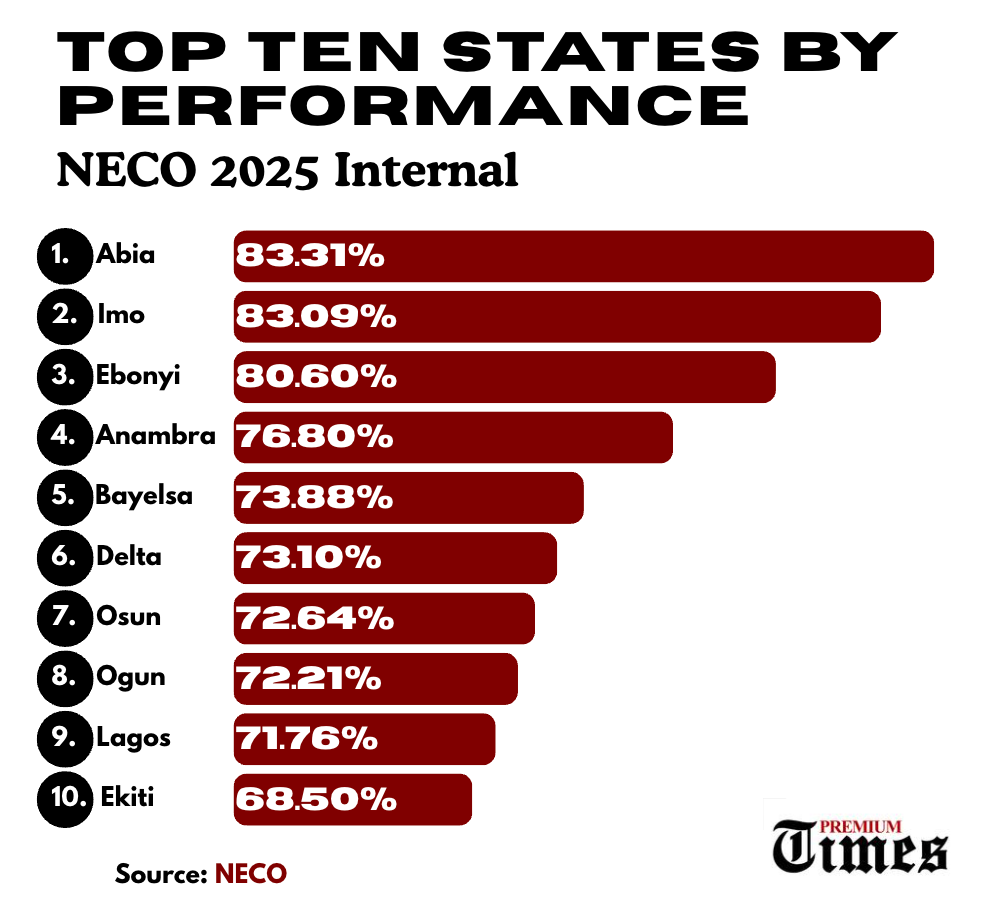
According to the official statistics released by NECO, 60.26% of candidates obtained five credits and above, including English Language and Mathematics, which is the benchmark most universities, polytechnics, colleges of education, and employers require. Additionally, 84.26% of candidates earned five credits and above regardless of English and Mathematics requirements.
These figures provide a clear picture of student performance across Nigeria and help answer the important question: How many percent of people pass NECO?
NECO Pass Rate at a Glance
Here is a summary of the key statistics:
| Category | Percentage |
|---|---|
| Five credits and above including English and Mathematics | 60.26% |
| Five credits and above regardless of English and Mathematics | 84.26% |
| Candidates who sat for the examination | 1,358,339 |
| Candidates who scored five credits including English and Mathematics | 818,492 |
| Candidates who scored five credits regardless of English and Mathematics | 1,144,496 |
These statistics show that more than half of all candidates met the minimum admission requirement for most tertiary institutions in Nigeria.
Understanding What “Passing NECO” Really Means
Many students misunderstand what it means to pass NECO.
There are actually two ways people measure a NECO pass rate:
1. General Pass Rate
This refers to candidates who obtained five credits and above in any subjects, regardless of whether English Language and Mathematics were included.
Using this standard, the pass rate stands at 84.26%.
2. University Admission Pass Rate
This is the more important figure.
Most universities require at least five credits including:
- English Language
- Mathematics
- Relevant subjects for the chosen course
Using this standard, 60.26% of candidates passed NECO.
This is why education experts usually focus on the 60.26% figure when discussing NECO performance.
Total Number of Candidates Who Wrote NECO
The examination recorded one of the largest participation figures in recent years.
NECO reported:
- 1,367,210 candidates registered
- 1,358,339 candidates actually sat for the examination
Among those who sat for the examination:
- 680,292 were males
- 678,047 were females
This shows a relatively balanced participation between male and female candidates across Nigeria.
How Good Is a 60.26% Pass Rate?
A pass rate of 60.26% can be viewed from different perspectives.
Positive Side
More than 818,000 students achieved the minimum requirement for admission into tertiary institutions.
This indicates that a significant number of candidates were adequately prepared and able to meet national academic standards.
Areas of Concern
A 60.26% pass rate also means nearly 40% of candidates failed to obtain five credits including English and Mathematics.
For many students, this creates challenges such as:
- Delayed admission
- Need for another examination attempt
- Additional educational expenses
- Increased competition for available admission spaces
Therefore, while the pass rate is encouraging, it also highlights areas where improvement is needed.
Why English and Mathematics Matter So Much
One major reason many students fail to meet admission requirements is difficulty in English Language and Mathematics.
Most universities consider these subjects compulsory.
Even if a student performs well in other subjects, failure in either English or Mathematics may prevent admission.
For example:
A student may have:
- Credit in Biology
- Credit in Chemistry
- Credit in Physics
- Credit in Agricultural Science
- Credit in Civic Education
But without English or Mathematics, many universities will not accept the result.
This explains why the difference between the 84.26% pass rate and the 60.26% pass rate is so significant.
What the Statistics Reveal About Nigerian Students
The NECO results reveal several important trends.
Improved Academic Performance
The fact that more than 84% obtained five credits indicates that many students have a strong understanding of several subjects.
This suggests that teaching quality and student preparation have improved in many schools.
Core Subjects Remain a Challenge
The drop from 84.26% to 60.26% highlights ongoing challenges in English Language and Mathematics.
These two subjects continue to be major barriers to admission for many candidates.
Increased Competition for Admission
Since over 818,000 candidates met the basic admission requirement, competition for university admission remains intense.
Students need more than just a NECO pass to secure admission.
They often require:
- Strong UTME scores
- Good post-UTME performance
- Competitive aggregate scores
Comparison Between Internal and External NECO Results
There are two major NECO examinations:
NECO Internal Examination
This is the examination taken by students in secondary schools.
Pass rate:
- 60.26% obtained five credits including English and Mathematics.
NECO External Examination
This examination is mostly taken by private candidates.
Statistics show that 71.63% of candidates obtained five credits and above including English and Mathematics.
Interestingly, the external examination recorded a higher pass rate.
Possible reasons include:
- Better preparation by repeat candidates
- More focused study schedules
- Greater examination experience
Factors That Influence NECO Pass Rates
Several factors affect the percentage of students who pass NECO.
Quality of Teaching
Schools with qualified teachers often produce better results.
Effective teaching methods help students understand difficult topics and improve examination performance.
Student Preparation
Students who begin preparation early generally perform better.
Consistent study habits often lead to stronger results than last-minute reading.
Learning Environment
A conducive learning environment contributes significantly to academic success.
Factors include:
- Availability of textbooks
- Access to laboratories
- Stable learning conditions
- Adequate classroom facilities
Examination Discipline
Examination integrity also affects overall performance.
NECO reported significant efforts to reduce examination malpractice and improve the credibility of results.
What These Statistics Mean for Students
Understanding the NECO pass rate helps students make informed decisions.
If You Passed
If you obtained five credits including English and Mathematics, you have crossed an important milestone.
Your next focus should be:
- JAMB performance
- Admission requirements
- Course selection
- Institution choice
If You Did Not Meet the Requirement
A poor result is not the end of your academic journey.
Many successful graduates once rewrote examinations.
Options include:
- Rewriting NECO
- Taking WAEC again
- Combining results
- Considering alternative educational pathways
Can You Gain Admission with a Combined Result?
Yes.
Many Nigerian institutions accept a combination of:
- NECO and WAEC
- Two NECO sittings
- NECO and NABTEB
This means students who are missing one or two subjects can improve their chances through another examination sitting.
However, candidates should always verify the specific requirements of their chosen institution.
Why the NECO Pass Rate Matters
The NECO pass rate is important because it reflects:
Educational Quality
A higher pass rate often suggests improvements in teaching and learning.
University Admission Trends
Admission competition is directly affected by the number of students who meet the minimum requirements.
Government Education Policies
Educational authorities use these statistics to identify areas needing intervention and support.
Student Expectations
The pass rate helps future candidates understand the level of preparation required for success.
Common Mistakes That Cause Students to Fail NECO
Many students who fail NECO make similar mistakes.
Poor Time Management
Some candidates spend too much time on difficult questions and fail to complete the examination.
Inadequate Preparation
Starting preparation only a few weeks before the examination often leads to weak performance.
Ignoring Past Questions
Past questions help students understand examination patterns and frequently tested topics.
Weak Foundation in Core Subjects
Many students struggle because they have not mastered basic concepts in English and Mathematics.
How Future Candidates Can Improve Their Chances
Students preparing for NECO can increase their chances of success by following proven strategies.
Create a Study Timetable
A structured timetable ensures all subjects receive adequate attention.
Focus on English and Mathematics
Since these subjects determine admission eligibility, they should receive extra attention.
Practice Regularly
Frequent practice improves speed, accuracy, and confidence.
Attend Classes Consistently
Regular attendance helps students avoid gaps in understanding.
Use Recommended Textbooks
Studying approved materials improves knowledge coverage and examination readiness.
Key Lessons From the NECO Statistics
Several important lessons emerge from the latest NECO statistics.
Success Is Achievable
More than 818,000 candidates obtained the required credits for admission.
Preparation Matters
The difference between passing and failing often comes down to preparation quality.
English and Mathematics Are Critical
Students should prioritize these subjects throughout their secondary school education.
Competition Remains High
Meeting the minimum requirement is only the first step toward admission.
Final Verdict: How Many Percent of People Pass NECO?
The latest official NECO statistics show that 60.26% of candidates passed NECO with five credits and above, including English Language and Mathematics, which is the standard most universities and higher institutions require for admission. Meanwhile, 84.26% of candidates obtained five credits and above regardless of English and Mathematics.
In simple terms, if you ask, “How many percent of people pass NECO?”, the most accurate answer is 60.26% when using the admission standard recognized by most Nigerian tertiary institutions. This means that roughly six out of every ten candidates achieved the qualifications needed for university admission, while four out of ten still faced challenges meeting the required benchmark.
For students, the message is clear: focus strongly on English Language and Mathematics, prepare consistently, and treat NECO as an important stepping stone toward higher education and future career opportunities.